
A broken air conditioner can quickly turn a comfortable home into an uncomfortable one, especially during the hottest summer days in Iowa. Whether you need emergency AC repairs because your system suddenly stops cooling, refuses to turn on, or starts making unusual noises, knowing what to do before professional help arrives can save time and help prevent additional damage.
If you’re searching for emergency AC repair in Cedar Rapids, don’t panic. There are several safe checks you can perform before calling a technician. Some problems are simple enough to identify, while others require professional attention.
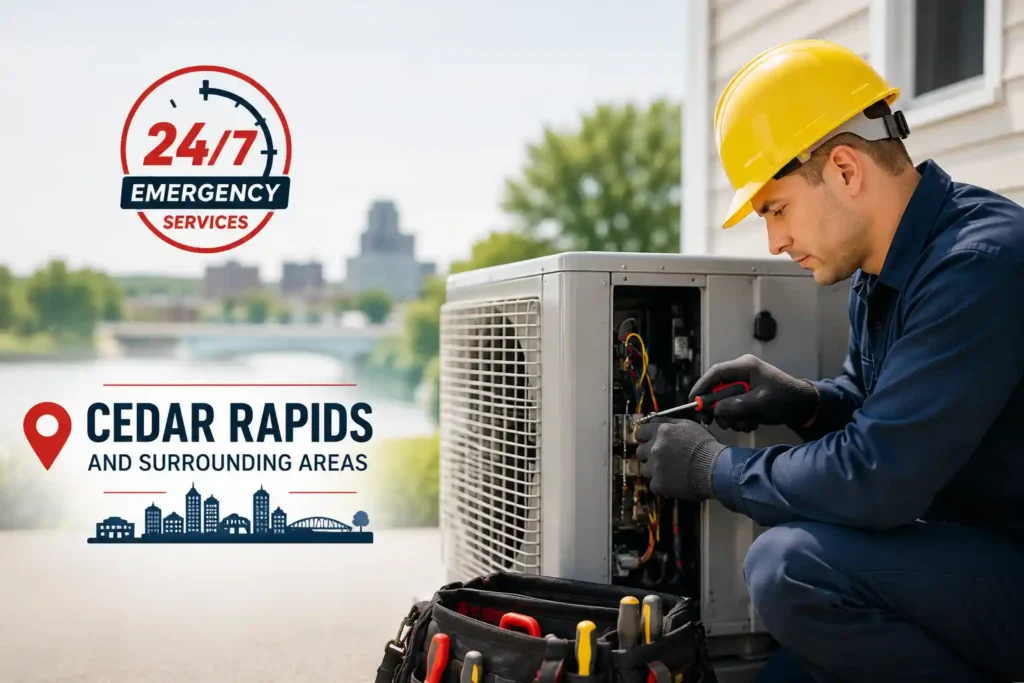
At
Cedar Rapids Appliance Service, we believe informed homeowners can often reduce unnecessary stress by understanding the basics of their cooling system. The tips below will help you stay safe while determining whether your air conditioner needs immediate repair.
Check Your Thermostat First
Before assuming your air conditioner has failed, inspect the thermostat.
Sometimes the solution is surprisingly simple.
Make sure:
- The thermostat is set to Cool.
- The temperature is set lower than the current room temperature.
- The batteries are working if your thermostat uses them.
- The display is functioning normally.
Accidentally changing a setting or weak batteries can stop your cooling system from operating properly.
If everything appears normal but your home still isn’t cooling, continue with the next steps.
Inspect the Circuit Breaker
Power interruptions are another common reason an air conditioner suddenly stops working.
Locate your home’s electrical panel and check whether the breaker connected to your HVAC system has tripped.
If it has:
- Reset it only once.
- Wait a few minutes.
- Try starting the system again.
If the breaker trips repeatedly, leave it off and avoid resetting it multiple times. This could indicate an electrical problem that should be inspected by a professional.
Replace or Check the Air Filter
A dirty air filter is one of the most overlooked causes of cooling problems.
When airflow becomes restricted, your air conditioner has to work much harder to cool your home.
This can lead to:
- Weak airflow
- Reduced cooling performance
- Frozen evaporator coils
- Higher electricity bills
- Increased wear on system components
If your filter looks dusty or clogged, replace it with a clean one.
Regular filter replacement is one of the easiest ways to improve efficiency and reduce unnecessary strain on your HVAC system.
Look Around the Outdoor Condenser Unit
Your outdoor unit also needs proper airflow to operate efficiently.
Take a quick walk outside and inspect the condenser.
Look for:
- Leaves
- Grass clippings
- Branches
- Dirt buildup
- Objects blocking airflow
Clear away loose debris while avoiding contact with electrical components or refrigerant lines.
Good airflow around the condenser helps your system remove heat more efficiently.
Turn Off the AC if You See Ice
Ice on an air conditioner is never a good sign.
If you notice frost or ice forming on the indoor coil or outdoor unit, switch the system off immediately.
Running a frozen air conditioner may damage important components such as the compressor.
Allow the ice to melt completely before restarting the system or requesting professional AC repair services if the problem returns.
Listen for Unusual Sounds
Your air conditioner should operate with a steady, consistent sound.
If you hear unusual noises such as:
- Grinding
- Banging
- Buzzing
- Squealing
- Clicking
it’s usually best to turn the system off.
Mechanical problems rarely improve on their own, and continuing to operate the unit can increase repair costs.
Is the AC Blowing Warm Air?
Many homeowners experience a situation where the air conditioner runs continuously but never cools the house.
This issue may be caused by:
- Low refrigerant
- Dirty air filters
- Frozen coils
- Thermostat problems
- Electrical issues
If you’re experiencing this symptom, our guide explaining why your AC is blowing warm air covers several common causes and simple checks you can perform before requesting emergency service.
Check Airflow Throughout Your Home
Walk through each room and inspect the supply vents.
Make sure:
- Furniture isn’t blocking vents.
- Curtains aren’t covering registers.
- Every vent is fully open.
Poor airflow in one room may simply be caused by a blocked vent rather than a major air conditioning failure.
If airflow is weak throughout the entire home, your HVAC system may require a professional inspection.
Keep Your Home as Cool as Possible
While waiting for a technician, focus on reducing indoor heat.
Simple steps include:
- Closing blinds and curtains.
- Keeping exterior doors closed.
- Avoiding the use of ovens or other heat-producing appliances.
- Running ceiling fans to improve air circulation.
These temporary measures won’t repair the air conditioner, but they can make your home more comfortable until professional help arrives.
Signs You Need Immediate Emergency AC Repair
Some air conditioning problems shouldn’t be ignored. Waiting too long can increase repair costs and may even lead to complete system failure.Not every air conditioning issue requires immediate emergency service.
Learn what qualifies as an AC emergency to better understand which situations need urgent attention and which can be scheduled for regular repair.
Contact a professional as soon as possible if you notice any of the following:
- Your AC won’t turn on.
- Warm air continues blowing from the vents.
- A burning smell comes from the system.
- Water is leaking around the indoor unit.
- Ice keeps forming on the evaporator coil.
- The circuit breaker trips repeatedly.
- Loud banging, grinding, or buzzing noises.
These warning signs often indicate mechanical or electrical issues that require professional diagnosis.
What Information Should You Have Ready?
When you call for emergency service, providing accurate information can help the technician prepare before arriving.
Try to note:
- When the problem first started.
- Any unusual sounds or smells.
- Whether the breaker has tripped.
- If you’ve recently replaced the air filter.
- Whether the system is blowing warm air or no air at all.
- Any error messages shown on the thermostat.
The more information you can provide, the easier it may be to identify the problem quickly.
Avoid DIY Repairs That Could Make Things Worse
It’s understandable to search online for quick fixes during an emergency. However, not every repair is safe to perform yourself.
Avoid attempting repairs involving:
- Refrigerant lines
- Compressors
- Capacitors
- Electrical wiring
- Fan motors
- Control boards
These components require specialized tools and experience. Attempting major repairs without proper training can create safety hazards and may cause additional damage.
Instead, focus on the simple inspection steps covered earlier and leave complex repairs to qualified professionals.
Prevent Future AC Emergencies
Many emergency breakdowns happen because small maintenance issues are ignored over time. Regular maintenance helps your system operate more efficiently and can reduce the chances of requiring AC emergency repair during the hottest summer months.
Simple habits include:
- Replacing the air filter every one to three months.
- Keeping the outdoor condenser free of debris.
- Scheduling seasonal maintenance.
- Listening for unusual noises.
- Checking airflow throughout your home.
- Addressing small issues before they become larger problems.
Learning about the common AC problems homeowners face can also help you recognize early warning signs before your cooling system stops working completely.
Why Fast Action Matters
During a Cedar Rapids summer, indoor temperatures can rise quickly when an air conditioner stops working.
Ignoring the problem may lead to:
- Higher repair costs.
- Increased wear on system components.
- Reduced indoor comfort.
- Additional damage to your HVAC system.
Taking action early often helps prevent minor issues from becoming major repairs.
When Should You Call a Professional?
If you’ve completed the basic checks and your air conditioner still isn’t cooling properly, it’s time to seek professional air conditioning repair services. Continuing to operate a malfunctioning system may place unnecessary stress on important components, increase repair costs, and potentially lead to more serious damage.
If your cooling problem isn’t causing immediate safety concerns, you may be wondering whether it’s safe to delay the repair. Our guide explains whether AC repair can wait until morning and when it’s better to call for immediate service.
Whether the issue involves electrical components, refrigerant, airflow restrictions, or mechanical failure, a trained technician has the equipment needed to diagnose the problem safely.
If you need assistance, contact our team today to discuss your cooling issue and determine the next steps.
Final Thoughts
An air conditioner breakdown can happen without warning, but staying calm and performing a few simple checks may help you identify the cause while waiting for professional assistance.
Checking the thermostat, replacing a dirty air filter, inspecting the circuit breaker, and clearing debris around the outdoor unit are all safe steps that homeowners can perform before requesting emergency service.
If the system continues to malfunction or shows signs of electrical, mechanical, or cooling problems, don’t delay. Early diagnosis often helps prevent additional damage and reduces the risk of more expensive repairs.
At Cedar Rapids Appliance Service, we continue to publish practical appliance repair and home maintenance resources to help homeowners make informed decisions and better understand their heating and cooling systems.