
Knowing how often should you change your AC filter can help you maintain proper airflow and keep your cooling system working efficiently. There isn’t a replacement schedule that works for every house, though. How soon a filter gets dirty depends on a variety of factors, including the type of filter, thickness, indoor air quality, pets, and the number of people living in your home.
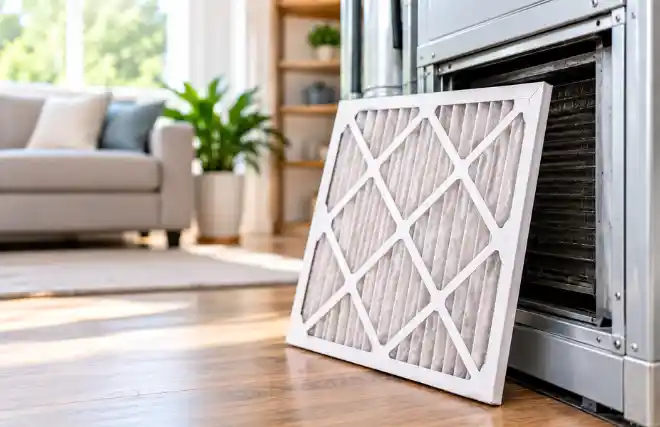
A monthly filter check is a smart place to start for many houses. While certain pleated filters can last 30 to 90 days, some 1-inch filters might need to be changed around every 30 days. Media filters that are thicker could last much longer. Always refer to the manufacturer’s recommendations for the specific filter you are using.
How Often Should You Change Your AC Filter?
So, how often should you change your AC filter? For a typical central air conditioning system, a practical starting range is about 30 to 90 days.
It could be necessary to replace a 1-inch fiberglass filter roughly every 30 days. The typical lifespan of a 1-inch pleated filter is between 30 and 90 days.
Depending on the system and home environment, some 4-inch media filters can last anywhere from six to twelve months.
Similar ranges are provided by the carrier, who also emphasizes that system usage, household circumstances, and filter thickness may alter the timetable.
A simple AC filter replacement schedule
| Filter type | Typical replacement range |
| 1-inch fiberglass | About every 30 days |
| 1-inch pleated | About 30–90 days |
| 4-inch media filter | About 6–12 months |
| Washable filter | Clean according to manufacturer instructions |
These are general guidelines, not guarantees. The condition of the filter should always be considered.
What Affects How Often You Need a New Filter?
The answer to how often to change AC filter can change when the conditions inside your home change.
Pets
Dogs and cats produce hair and dander that can collect on an HVAC filter. A home with several pets may need more frequent filter checks than a home without pets.
If you can see a heavy layer of dust or pet hair building up before your normal replacement date, inspect the filter frequently.
Allergies and Indoor Air Quality
Dust, pollen, smoke, construction activity, and other airborne particles can cause a filter to become dirty faster.
Carrier recommends checking filters more frequently when indoor air quality is affected by factors such as smoking, candles, fireplaces, or nearby construction.
AC Usage
When your air conditioner runs for extended periods of time in hot weather, your filter might gather particles more quickly. When summer temperatures are high, a filter that appears great in a mild month could get dirty much more quickly.
This is one reason air conditioner filter replacement how often should not be treated as a fixed calendar rule.
Filter Thickness and Type
The thickness of the filter is also important. According to the carrier, depending on the type and quality of the filter, its lifespan can vary from about 30 days to a year.
How Often Should You Change Your Air Filter If It Looks Clean?
If you’re wondering how often should you change your air filter, don’t rely only on the calendar or how the filter looks from a distance.
It’s a good habit to conduct an inspection every month. Take out the filter and look for any obvious dust accumulation. Even if you haven’t reached your regular replacement date, airflow may be limited if the filter is excessively laden.
Additionally, because household conditions can change and impact how quickly a filter gets dirty, Home Depot advises routine visual inspection.
The answer to how often should AC filters be changed can therefore be different from one home to another.
Signs Your AC Filter Needs to Be Changed
Watch for these signs:
- The filter looks gray, dusty, or clogged.
- Airflow from the vents feels weaker than usual.
- Rooms take longer to cool.
- Dust seems to build up more quickly.
- Your AC runs for longer periods.
- You recently had construction or unusually dusty conditions.
- You have added a new pet.
- You notice more airborne particles inside the home.
A dirty filter can restrict airflow through an AC system. The U.S. Department of Energy states that routinely replacing or cleaning air filters can lower an air conditioner’s energy consumption by 5% to 15%.
For more information, see the U.S. Department of Energy guidance on home cooling.
How to Replace an AC Filter Safely
Turn off the air conditioning system before changing a disposable filter. Find the filter and measure its dimensions. Install the replacement filter in the proper orientation by looking for the airflow arrow printed on the filter frame.
Verify that the new filter fits correctly. Problems may arise from a filter that is too big, too small, or improperly placed.
Furthermore, don’t assume that the system with the greatest MERV rating is the best option. The filter should be suitable for your equipment because higher-efficiency filters may increase airflow resistance. Carrier points out that airflow and filtering efficiency must be taken into account simultaneously.
Consult your equipment handbook or a trained expert if you’re unclear about the proper filter type or size.
What If Changing the Filter Doesn’t Fix the AC?
Replacing a dirty filter can improve airflow, but it cannot solve every AC problem.
If your system still has weak airflow, poor cooling, unusual cycling, water around the indoor unit, or another problem after you replace the filter, the cause may involve another component.
If your AC repeatedly turns on and off, read our guide on understanding AC short cycling.
If ice is forming on the system, see our guide on what to do when an AC freezes up.
For information about deciding when a cooling problem needs attention during hot weather, read when summer AC repair should be handled.
And if your air conditioner starts producing unusual sounds, our upcoming common causes of loud AC noises guide will cover that problem in more detail.
Keep Your AC Filter on a Regular Schedule
If you’re still asking how often should you change your AC filter, start by checking it every month. Then adjust your AC filter replacement schedule according to the filter type, household conditions, pets, indoor air quality, and how heavily your AC operates.
Regular filter maintenance is simple, but it is only one part of proper AC care. If your system continues to struggle after a filter replacement, don’t ignore the symptoms.
For more appliance and cooling information, visit our Cedar Rapids Appliance Service home resource. If you need professional help with a cooling problem, contact our team for local AC repair in Cedar Rapids or schedule AC service with our team.
Frequently Asked Questions About AC Filters
How often should you change your AC filter?
For most homes, check the filter every month. A 1-inch filter may need replacement about every 30 days, while some pleated filters can last 30–90 days. Thicker filters may last several months. The right schedule depends on the filter type, AC usage, pets, indoor air quality, and household conditions.
How often should you change your air filter?
How often should you change your air filter depends on the filter and the conditions inside your home. A common starting point is every 1–3 months for many standard residential filters. Homes with pets, allergies, heavy dust, or frequent AC use may need more frequent changes.
How often should AC filters be changed?
How often should AC filters be changed depends mainly on filter thickness and household conditions. Inspecting the filter monthly is a good habit. Replace it sooner if it becomes visibly dirty or begins restricting airflow.
How often should you replace your AC filter?
You should replace your AC filter according to the manufacturer’s recommendation and the condition of the filter. Many 1-inch filters require replacement every 30–90 days, while some thicker filters can last 6–12 months.
Can a dirty AC filter cause cooling problems?
Yes. A heavily clogged filter can restrict airflow through the system. This may make it harder for your AC to cool the home properly and can contribute to longer operating times. If changing the filter does not improve the problem, another part of the system may need to be checked.
How do I know when my AC filter needs changing?
Check for visible dust buildup, reduced airflow, longer cooling cycles, or increased dust around the home. If the filter looks heavily clogged before your normal AC filter replacement schedule, replace it rather than waiting for a specific date.
Should I change my AC filter more often if I have pets?
Possibly. Pet hair and dander can collect on an air filter more quickly. If you have multiple pets, inspect the filter monthly and replace it when it becomes noticeably dirty. Your actual AC filter replacement schedule may therefore be shorter than the schedule used in a home without pets.
Is a thicker AC filter always better?
Not necessarily. A thicker or higher-efficiency filter can capture more particles, but the filter must be suitable for your AC system. A filter that creates too much airflow resistance can affect system performance. Check your equipment or manufacturer’s recommendations before changing filter type.