
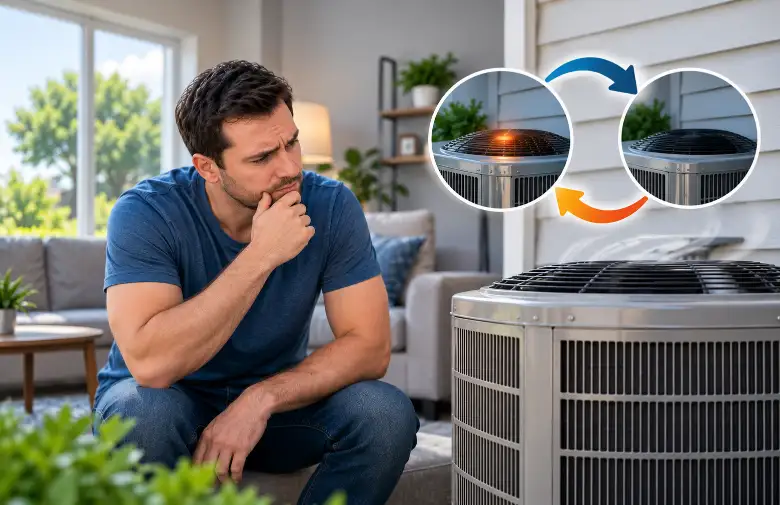
AC short cycling happens when your air conditioner starts, runs for a short time, shuts down, and then starts again before completing a normal cooling cycle. During a hot Cedar Rapids summer, this repeated starting and stopping can leave rooms uncomfortable while putting unnecessary strain on the cooling system.
The Cedar Rapids Appliance Service team helps local residents understand and address cooling problems that can affect AC performance. An occasional shorter cycle does not always mean something is wrong.
Outdoor temperature, thermostat settings, and cooling demand can affect how long an AC runs. However, when the system repeatedly operates for only a few minutes and cannot maintain the set temperature, there may be an airflow, thermostat, refrigerant, electrical, or equipment-sizing problem.
Understanding why this happens can help you determine what you can safely check yourself and when professional service is appropriate.
What Is AC Short Cycling?
A properly operating air conditioner runs until the thermostat detects that the home has reached the selected temperature. The system then shuts down and remains off until additional cooling is needed.
With AC short cycling, that process is interrupted. The air conditioner may start normally but shut down before enough heat and humidity have been removed from the home. A short time later, it starts again.
You may notice that the outdoor unit frequently starts and stops, indoor temperatures remain inconsistent, or the AC struggles to reach the thermostat setting. The house may also feel more humid because short cooling cycles provide less time for the system to remove moisture from indoor air.
What Causes AC Short Cycling?
Several problems can interrupt a normal cooling cycle. Some have relatively simple solutions, while others require professional diagnosis.
1. A Dirty or Clogged Air Filter
Restricted airflow is one of the first things worth checking. When an air filter becomes heavily loaded with dust and debris, less air can move through the system. This can interfere with heat transfer and contribute to problems such as an excessively cold or frozen evaporator coil.
Check the filter and replace it when it is dirty, using the type recommended for your system. Filter needs vary depending on the equipment, household conditions, pets, dust levels, and filter type.
Filter maintenance deserves more attention than a single troubleshooting step, which is why our guide explaining how frequently an AC filter needs replacing will cover this subject in greater detail.
2. Thermostat Problems
Sometimes the air conditioner itself is not the source of AC short cycling. A thermostat that is malfunctioning, incorrectly positioned, or sending inconsistent signals can cause the system to start and stop at the wrong times.
Check that the thermostat is set to cooling mode and that its temperature setting is reasonable. If it uses batteries, check those as well. A thermostat located near direct sunlight, a supply vent, or another source of heat or cold may also receive a temperature reading that does not accurately represent the rest of the home.
3. A Frozen Evaporator Coil
Ice around the evaporator coil or refrigerant line is another warning sign. A frozen AC can result from restricted airflow, a dirty filter, refrigerant problems, or other system faults.
Continuing to operate an air conditioner while significant ice is present is not a good solution. Our guide to the reasons an air conditioner can freeze up explains this problem in more detail and can help you recognize common warning signs.
4. Low Refrigerant or a Refrigerant Leak
Incorrect refrigerant conditions can interfere with cooling performance and system pressures, potentially contributing to repeated shutdowns.
Refrigerant work is not a normal DIY maintenance task. The U.S. Environmental Protection Agency explains that technicians servicing equipment containing regulated refrigerants need appropriate Section 608 certification and advises homeowners to have leaks located and repaired rather than simply treating a leaking system by adding refrigerant.
If you suspect a refrigerant problem, professional diagnosis is the appropriate next step.
5. Dirty or Blocked Outdoor Equipment
The outdoor condenser needs adequate airflow to release heat. Leaves, grass clippings, vegetation, and accumulated debris around the unit can interfere with that process.
Look around the outdoor equipment and remove loose obstructions that are blocking airflow. If the coil itself is heavily dirty or damaged, professional cleaning may be safer than aggressive DIY methods that could bend delicate fins.
6. Electrical or Component Problems
Capacitors, contactors, wiring, safety controls, and other electrical components help the cooling system start and operate correctly. A failing component can sometimes cause the equipment to start and then stop unexpectedly.
Electrical diagnosis should be left to a qualified technician. If the system repeatedly trips a breaker, makes unusual electrical noises, or has difficulty starting, avoid repeatedly resetting it without determining the cause.
7. An Oversized Air Conditioner
Bigger cooling equipment is not necessarily better. An oversized AC can cool the immediate space so quickly that it reaches the thermostat setting before completing a longer, more effective cooling cycle.
This can contribute to temperature fluctuations and inadequate humidity control. If AC short cycling has been present since the system was installed, equipment sizing may be worth evaluating.
How to Fix a Short-Cycling Air Conditioner
Start with the simple things you can inspect safely. Check the air filter, confirm the thermostat settings, make sure supply and return vents are not blocked, and look for obvious debris around the outdoor unit.
Also watch for ice, unusual sounds, weak airflow, or an AC that runs but does not cool effectively. If your system is struggling with temperature as well as cycling, our explanation of common AC problems affecting Cedar Rapids homes can help you understand other symptoms that may occur alongside the problem.
If these basic checks do not stop the repeated cycling, avoid repeatedly switching the system on and off. Refrigerant, electrical, compressor, coil, and equipment-sizing problems require more detailed testing.
Why You Shouldn’t Ignore AC Short Cycling
Repeated startups can increase wear on important components, particularly when the underlying fault continues for an extended period. Short cycles can also reduce cooling performance and make it harder for the system to manage indoor humidity effectively.
The result may be uneven comfort, unnecessary energy use, and eventually a more serious system problem.
Catching AC short cycling early gives you a better opportunity to correct a relatively manageable cause before continued operation contributes to additional damage.
When Does Short Cycling Need Professional AC Repair?
If changing a dirty filter, checking the thermostat, and clearing obvious airflow obstructions do not solve the problem, professional diagnosis is the sensible next step.
Warning signs such as recurring ice, warm air from the vents, electrical problems, unusual noises, or extremely brief cooling cycles deserve particular attention.
A technician can test system pressures, airflow, thermostat operation, electrical components, coils, and other equipment to identify why the cycle is being interrupted. For local help, our Cedar Rapids cooling system repair specialists can inspect persistent cooling problems and determine the appropriate repair.
If your AC stops working altogether rather than repeatedly cycling, the problem may involve the thermostat, electrical components, or another part of the cooling system. In this situation, avoid repeatedly restarting the unit and consider having the system professionally inspected.
Preventing Future Short-Cycling Problems
Routine care can reduce the likelihood of some causes of AC short cycling. Keep filters from becoming excessively dirty, avoid blocking indoor vents, keep debris away from the outdoor equipment, and pay attention when the system begins operating differently.
It is also useful to address unusual noises, weak airflow, ice formation, or declining cooling performance before they develop into larger problems.
For questions about persistent cycling or other cooling problems, you can reach our Cedar Rapids service team to discuss the symptoms and determine whether professional inspection is needed.
Frequently Asked Questions About AC Short Cycling
Why is my AC short cycling?
Common possibilities include restricted airflow, a dirty filter, thermostat problems, a frozen evaporator coil, incorrect refrigerant conditions, electrical faults, dirty outdoor equipment, or an oversized system. The exact cause requires diagnosis when basic checks do not solve the problem.
How do I stop my AC from short cycling?
Start by checking the filter, thermostat settings, indoor vents, and outdoor unit for obvious airflow restrictions. If AC short cycling continues, professional testing may be necessary because refrigerant, electrical, coil, or compressor problems cannot be reliably diagnosed through basic visual checks.
Is AC short cycling harmful to the system?
Repeated starting and stopping can place additional stress on cooling components and reduce the system’s ability to cool and control humidity effectively. Persistent short cycling should therefore not be ignored.
Why does my AC turn on and off but not cool the house?
Restricted airflow, frozen coils, thermostat issues, refrigerant problems, or other mechanical faults can cause both poor cooling and frequent cycling. If basic filter and thermostat checks do not correct the problem, the system should be inspected.
Can a dirty air filter cause short cycling?
Yes. A heavily clogged filter can restrict airflow through the cooling system and contribute to operating problems. Replacing a dirty filter is one of the simplest checks to make when an air conditioner begins cycling abnormally.