
Is your air conditioner making a strange or loud sound? You may be wondering why is my air conditioner making a loud noise and whether you should be worried. Some AC sounds are normal, but sudden banging, grinding, buzzing, or squealing can point to a problem.
An air conditioner making loud noises may have a loose part, a dirty fan, a motor problem, or an issue with an electrical component. The sound itself can give you a clue about what is wrong, but it does not always tell you the exact cause.
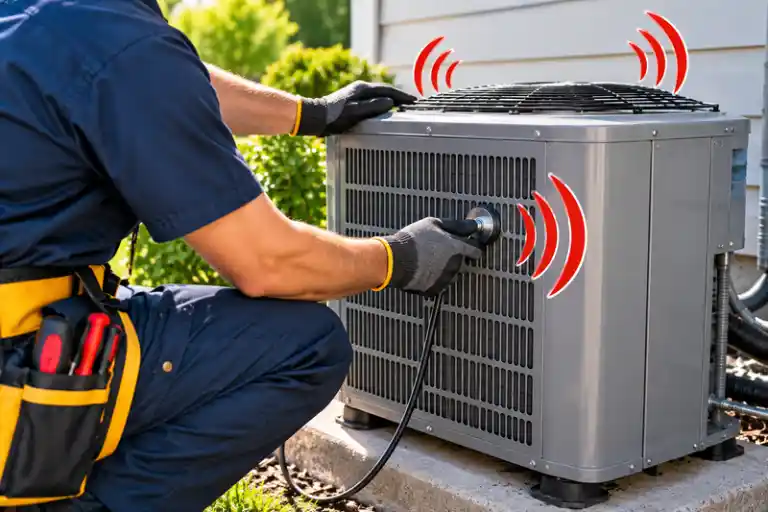
In this guide, we will explain the most common AC noises, what they may mean, and what you can safely check at home. We will also explain when it is best to turn off your system and call a professional.
If you live in Cedar Rapids, Iowa, this guide can help you understand what to do when your air conditioner starts making unusual sounds.
Is It Normal for an Air Conditioner to Make Noise?
Yes. Every air conditioner makes some noise while running. You may hear the fan moving air, the compressor operating, or a brief click when the system starts or stops.
These sounds are usually normal if they remain consistent with how your system has always sounded.
The concern starts when the noise suddenly changes, becomes much louder, or comes with another problem.
Look out for these signs:
- A loud bang when the AC starts or stops.
- A buzzing or humming sound that is louder than usual.
- Grinding or scraping sounds.
- Repeated clicking without the system starting.
- A rattling fan or vibrating panel.
- Loud noise combined with weak airflow or poor cooling.
If you notice one of these problems, pay attention to when the sound occurs and where it seems to come from. This information can help a technician find the cause.
1. Why Is My Air Conditioner Making a Loud Buzzing Noise?
A loud buzzing noise from an air conditioner can have several causes. It may come from a loose panel, a fan problem, a motor, or an electrical component.
Here are some common possibilities.
Loose parts: A loose screw or access panel may vibrate while the system runs.
Fan problems: A damaged fan blade or an obstruction near the fan may cause vibration and unusual noise.
Electrical problems: A faulty electrical component may produce a buzzing sound. This type of problem needs professional attention.
Motor trouble: A motor that is struggling to start or is wearing out may make an unusual buzzing noise.
What should you do?
First, listen carefully to determine whether the sound comes from the indoor or outdoor unit. Do not remove panels or touch wires to investigate.
If the buzzing is loud or continuous, turn the system off if it is safe to do so. You should also stop using it if you notice a burning smell or the unit fails to start properly.
A qualified technician can inspect the fan, motor, electrical components, and other parts to find the cause.
2. Why Is My Air Conditioner Making a Loud Humming Noise?
A low humming sound can be part of normal AC operation. However, why is my air conditioner making a loud humming noise becomes an important question when the sound gets louder or the system struggles to start.
Possible causes include:
- A worn motor.
- A problem with the compressor.
- An electrical component that is not working correctly.
- Loose parts that vibrate during operation.
- A fan that is blocked or damaged.
Pay attention to what happens when the system starts. If you hear a loud hum but the fan does not start, or the AC does not cool your home, turn it off and arrange an inspection.
Do not keep restarting the system to see if it will work. Repeated attempts may put more stress on a component that is already having trouble.
3. Why Is My Air Conditioner Making a Loud Banging Noise?
A loud banging noise from an air conditioner may mean that a part is loose, damaged, or moving where it should not.
Possible causes include a loose fan blade, loose hardware, a damaged internal component, or a compressor problem. The exact cause depends on your AC system and when the noise occurs.
When does the banging happen?
- When the AC starts: A component may be moving unexpectedly as the system starts.
- While the AC runs: A loose or damaged part may be striking another component.
- When the AC stops: Changes in movement or vibration may reveal an existing problem.
Do not assume the sound is harmless just because the AC still works. If the banging is loud or repeated, turn off the system and arrange a professional inspection.
Never reach inside the outdoor unit to check the fan. Moving parts and electrical components can be dangerous.
4. Why Is My Air Conditioner Making a Rattling Noise?
An AC rattling noise often sounds like something is shaking or vibrating against the unit. Sometimes the cause is simple, such as a loose panel. In other cases, a fan or another component may be damaged.
Common causes include:
- Loose screws or panels.
- Leaves or debris around the outdoor unit.
- A loose grille or mounting bracket.
- A damaged or unbalanced fan blade.
- Vibration from the unit’s base.
What can you check safely?
Turn off the AC before checking the area around the outdoor unit. Look for leaves, grass, or other visible debris around the equipment.
You can also listen to determine whether the sound comes from the indoor or outdoor unit. Do not remove covers or put your hands through the grille.
If the rattling continues, a technician can inspect the fan, panels, fasteners, and mounting parts.
5. Why Is My Air Conditioner Making a Grinding or Squealing Noise?
Grinding and squealing sounds should not be ignored. They can point to friction, worn motor parts, or a mechanical component that is not moving properly.
Grinding noise
A grinding sound may come from a motor bearing, a damaged fan assembly, or contact between moving parts.
If the noise is harsh or continues while the AC runs, turn the system off. Running it for longer may cause further damage if a component is failing.
Squealing noise
A high-pitched squeal may come from a motor, bearing, or another moving part. The cause depends on the design and condition of your system.
Do not apply oil or lubricant unless the manufacturer specifically recommends it. Some motors are sealed and do not need additional lubrication.
If the noise starts suddenly or becomes louder, contact a qualified technician to have the system checked.
6. Why Is My Air Conditioner Making Repeated Clicking or Hissing Sounds?
Clicking and hissing can have different causes. The timing and loudness of the sound can help you decide what to do next.
Repeated clicking
A single click when the AC starts or stops may be normal. Repeated clicking without the system starting can point to a control, electrical, or component problem.
If the outdoor unit keeps clicking but does not start, avoid repeatedly switching it on and off. Turn it off and arrange an inspection.
Hissing noise
A brief hiss may occur as air moves or pressure changes inside the system. However, a persistent or unusually loud hiss may indicate an airflow or refrigerant-related problem.
Do not try to find or repair a refrigerant leak yourself. Refrigerant systems require proper equipment and trained handling.
If the hissing begins suddenly and loudly, cooling drops sharply, or other warning signs appear, turn off the AC and contact a qualified technician.
7. Why Is My Outdoor AC Unit Making a Loud Noise?
Your outdoor unit contains the compressor and fan, along with other important components. An unusual sound from this area may help narrow down the possible cause.
An outdoor AC unit making noise may have:
- Leaves or debris around the unit.
- A loose exterior panel.
- A damaged or obstructed fan.
- Loose mounting hardware.
- A motor or compressor problem.
- Vibration against the base or nearby structure.
Start by looking at the unit from a safe distance. Check whether plants, branches, or other objects are crowding the equipment.
Do not open the unit, reach through the grille, or attempt electrical repairs. If the noise is loud, metallic, or comes with poor cooling, turn the system off and contact a professional.
How to Tell Whether the Noise Comes From the Indoor or Outdoor Unit
Finding the source of the sound can help a technician diagnose the problem more quickly.
| Where you hear the sound | Possible causes |
| Indoor air handler or furnace area | Blower fan, motor, loose panel, or airflow restriction |
| Outdoor condenser | Fan, mounting hardware, compressor, or electrical components |
| Air vents or ductwork | Airflow restriction, loose ductwork, or vibration |
| Near the thermostat or controls | Clicking from controls or a nearby component |
These are possible causes, not definite diagnoses. Sound can travel through walls and ductwork, so it may be difficult to identify the exact source.
If you cannot tell where the noise is coming from, simply describe what you hear and when it happens. You do not need to open the equipment to provide useful information.
What Should You Do When Your Air Conditioner Makes a Loud Noise?
If your AC starts making an unusual sound, follow these steps.
Step 1: Identify the sound
Notice whether it is buzzing, humming, banging, rattling, grinding, squealing, clicking, or hissing.
Also note whether it happens when the system starts, while it runs, or when it shuts down.
Step 2: Look for other signs of trouble
Is your home cooling normally? Has the airflow become weaker? Does the system keep starting and stopping? Have you noticed an unusual smell?
These details can help a technician understand what may be wrong.
Step 3: Perform only safe checks
Turn off the system before checking accessible areas. Look for visible debris around the outdoor unit and check whether the air filter needs cleaning or replacement according to the manufacturer’s instructions.
For general maintenance advice, read the U.S. Department of Energy’s home cooling and air conditioner maintenance advice.
Do not remove electrical panels, touch wiring, reach near fan blades, or handle refrigerant lines.
Step 4: Turn off the AC if the noise is severe
Stop using the system if you hear loud banging or grinding, repeated abnormal buzzing, or notice a burning smell, smoke, or signs of electrical trouble.
If there is smoke or a fire hazard, move away and contact emergency services as appropriate. Do not approach or handle damaged electrical equipment.
Step 5: Arrange a professional inspection
If the noise continues, returns, or occurs with poor cooling, contact a qualified technician. They can inspect the system, identify the cause, and explain the repair options.
For homeowners looking for AC repair in Cedar Rapids, IA, getting the problem checked early may help prevent further damage.
Can a Dirty AC Filter Cause Loud Noise?
Yes, a dirty or clogged air filter can restrict airflow. Depending on your system, this may cause unusual airflow sounds, reduce cooling, or put extra strain on some components.
However, a dirty filter is not the cause of every loud AC noise. Banging, grinding, and electrical buzzing may point to other problems.
Check your filter according to the manufacturer’s instructions and clean or replace it as needed. If the noise continues, the system may need a closer inspection.
For more information, read our guide on how often to change your AC filter.
Can Loud AC Noises Increase Energy Bills?
They can, depending on the problem. A damaged fan, restricted airflow, or a motor that is struggling to work may affect how well your AC cools your home.
The system may run longer than usual or fail to reach the temperature you set. However, a loose panel that makes noise does not automatically mean your energy bills will increase.
Pay attention to changes in cooling, operating time, and energy use. If your AC also starts and stops too often, read our guide to common causes of AC short cycling.
If the system is noisy and not cooling properly, arrange an inspection rather than waiting for the problem to get worse.
When Should You Call an AC Repair Professional?
Some AC sounds are normal, but new or unusually loud noises deserve attention.
Contact a qualified technician if:
- The AC makes loud or repeated banging sounds.
- Grinding or squealing continues while the system runs.
- The outdoor fan does not start normally.
- Buzzing comes with a burning smell or other electrical symptoms.
- Cooling performance suddenly drops.
- The system repeatedly starts and stops.
- The noise continues after basic, safe checks.
If you hear a sudden, severe mechanical or electrical sound, turn off the AC and avoid running it until it has been inspected.
Homeowners in Cedar Rapids can explore professional AC repair options and discuss the symptoms with the service team. A technician can inspect the equipment, identify the problem, and explain the repair options before work begins.
How Can You Prevent Loud Air Conditioner Noises?
Regular maintenance can help you catch loose parts, dirty filters, airflow restrictions, and developing problems before they become more serious.
Here are a few simple habits that can help:
- Clean or replace the air filter as directed by the manufacturer.
- Keep leaves, grass, and other debris away from the outdoor unit.
- Keep supply and return vents clear.
- Schedule professional maintenance when appropriate.
- Pay attention to new sounds instead of ignoring them.
- Get cooling problems checked before they become worse.
Do not open sealed components or attempt repairs involving electrical parts, motors, or refrigerant. If a noise returns after basic maintenance, have the system inspected.
If you also notice ice forming on your system, read our guide to why an air conditioner may freeze up. Freezing and unusual noise can have different causes, so each symptom needs proper attention.
Water leaking from your indoor AC unit can have several causes, including a clogged drain line or a frozen evaporator coil. Learn what to do when your indoor AC unit leaks water to understand the common causes and how to handle this problem.
If your air conditioner is making unusual noises, do not ignore the problem. The right repair can help your system run properly and keep your home comfortable. Explore our Cedar Rapids appliance repair services to learn more about the help available for your home appliances. If you need assistance with a noisy AC unit, contact our service team to discuss the problem and find out about your repair options.
Frequently Asked Questions
1. Why is my air conditioner making a loud noise all of a sudden?
A sudden loud noise may come from a loose part, a damaged fan, a motor problem, or an electrical issue. Turn off the AC if the noise is severe or comes with a burning smell or poor cooling. If the sound continues, arrange a professional inspection.
2. Is it safe to run an AC that is making a loud buzzing noise?
It depends on the cause. A mild vibration may be less serious than electrical buzzing, but the sound alone cannot confirm the problem. If the buzzing is loud or continuous, or the system struggles to start, switch it off and contact a technician.
3. Why does my AC make a loud noise when it starts?
A startup noise may come from a loose panel, a moving component, or a problem with the fan, motor, or compressor. A brief, familiar click may be normal, but a loud bang or repeated unusual noise should be checked.
4. Why is my outdoor AC unit humming but not starting?
This may indicate a motor, capacitor, compressor, or electrical problem. Do not open the unit or keep trying to restart it. Turn it off and arrange a professional diagnosis.
5. Can a dirty filter make my air conditioner noisy?
Yes. A dirty filter can restrict airflow and may cause unusual airflow sounds or reduced cooling. Check and maintain the filter according to the manufacturer’s instructions. If the noise continues, another problem may be responsible.
6. Why does my air conditioner rattle at night?
The noise may be easier to hear when the house is quiet. Possible causes include loose panels, debris, vibration, or a fan problem. If the sound is new or becomes louder, have the unit inspected.
7. Should I turn off my AC if it makes a grinding noise?
Yes. It is safest to turn off the AC if you hear a harsh or continuous grinding sound. It may indicate friction or a damaged moving part. Avoid running the system until a technician has checked it.
8. How much does it cost to repair a noisy air conditioner?
The cost depends on the cause, parts required, system type, and labor. A loose panel may be simple to fix, while a motor or compressor problem can be more expensive. Ask for a diagnosis and repair estimate before approving the work.
9. When should I replace my AC instead of repairing it?
Replacement may be worth considering if your system is old, needs repeated expensive repairs, or has a major failure. A technician can help you compare the repair cost with the system’s condition and expected remaining life.
Get Help With a Noisy Air Conditioner in Cedar Rapids
A loud air conditioner can be frustrating, especially during warm weather. The type of sound and when it occurs can help narrow down the possible causes.
If you are asking why is my air conditioner making a loud noise, do not ignore a new or unusually loud sound. Check only the areas that are safe to inspect, maintain your filter as recommended, and turn off the system if you notice severe banging, grinding, electrical symptoms, or other warning signs.
Cedar Rapids homeowners can contact Cedar Rapids Appliance Service to discuss their AC problems and available repair options. Getting the problem checked early can help you understand what is wrong and decide on the right next step.